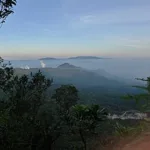
salakhalimunmountain.com – At first glance, Mount Salak appears as a quiet rainforest giant rising above the landscapes of West Java. Its slopes are wrapped in thick tropical forest, mist drifts across the ridges, and countless streams disappear into deep green valleys. But beyond its beauty and mystery, Mount Salak plays an essential role in something far more fundamental. It helps sustain one of the most important water systems in West Java.
Across villages, rice fields, waterfalls, and rivers, water flowing from Mount Salak supports ecosystems and communities alike. Rain that falls on its forests travels through layers of volcanic soil, feeds springs, and forms rivers that eventually reach the plains below. Understanding this natural process reveals why Mount Salak is far more than a scenic mountain. It is a vital water tower for the region.
A Natural Water Catchment Area
Mount Salak functions as a massive natural catchment area. Because of its elevation and location near the coast, the mountain captures moisture carried by ocean winds. When these moist air masses rise along the slopes, they cool and condense into clouds, producing frequent rainfall.
This rainfall does not simply run off the surface. The mountain’s volcanic soil absorbs and stores water like a sponge. Over time, the water slowly moves through underground channels, feeding springs and streams that emerge lower on the mountain.
Forests play a crucial role in this system. Thick vegetation slows rainwater as it reaches the ground, preventing erosion and allowing water to soak into the soil. Without the rainforest canopy, much of this water would rush downhill quickly, increasing flood risks while reducing long term water storage.
The Birthplace of Rivers and Streams
Many small rivers in West Java begin as quiet trickles on Mount Salak’s slopes. These streams gather strength as they move through valleys and forests, eventually connecting with larger river systems that supply water to nearby communities.
Water flowing from the mountain supports agriculture, especially rice cultivation in surrounding regions. Traditional irrigation systems rely on steady river flow that originates in high elevation forest areas like those found in Mount Salak and the nearby Halimun Salak National Park.
In many ways, the mountain acts as the starting point for entire water networks that stretch far beyond its forested ridges.
Waterfalls as Part of the System
Mount Salak is famous for its waterfalls, many of which lie within the Gunung Bunder area and surrounding valleys. These waterfalls are not only beautiful destinations for travelers. They are visible expressions of the mountain’s water cycle.
Rainwater that collects in forest soils eventually emerges along cliffs and rocky slopes. When these underground flows reach steep terrain, they spill outward as waterfalls such as Curug Cigamea, Curug Seribu, and Curug Pangeran.
Each waterfall represents a point where groundwater meets the surface again, continuing its journey toward rivers and agricultural land.
Supporting Agriculture in West Java
West Java is known for its fertile farmland and abundant rice terraces. Much of this agricultural productivity depends on reliable water sources. Mountains like Mount Salak ensure that water remains available even outside the rainy season.
Because the mountain stores water underground, streams continue flowing long after rainfall has ended. This slow release provides consistent irrigation for farms and plantations across the region.
Tea plantations, vegetable farms, and rice paddies all benefit from this dependable water supply. Without the natural water storage system created by volcanic mountains, agriculture in West Java would face far greater challenges.
Protecting Forests Protects Water
The relationship between forest protection and water stability is extremely strong. Healthy forests regulate water flow, prevent landslides, and maintain the balance of groundwater systems.
Halimun Salak National Park plays a major role in protecting these forests. By preserving large areas of natural vegetation, the park helps maintain the mountain’s ability to absorb and store rainfall.
When forests are cleared or degraded, water systems often become unstable. Rainwater flows too quickly across the surface, increasing floods while reducing groundwater recharge. Over time, rivers may become unpredictable or dry during certain seasons.
Conservation efforts around Mount Salak help prevent these problems and ensure that the region’s water system continues functioning naturally.
Water for Communities and Cities
The influence of Mount Salak’s water system extends beyond rural landscapes. Rivers that begin in the mountain’s forests eventually contribute to water supplies used by towns and cities across West Java.
As populations grow, protecting natural water sources becomes increasingly important. Mountains like Mount Salak serve as long term reservoirs that support both ecosystems and human needs.
By preserving forested catchment areas, West Java maintains access to clean water that originates from natural mountain environments.
Climate Stability and Water Balance
Mount Salak’s forests also help regulate local climate conditions. Dense vegetation maintains humidity, supports cloud formation, and reduces temperature fluctuations. These factors contribute to stable rainfall patterns that sustain the region’s water cycle.
When forest ecosystems remain intact, they create a balanced relationship between rainfall, groundwater storage, and river flow. This balance allows the mountain to continue functioning as a reliable water source year after year.
A Mountain That Sustains Life
For many visitors, Mount Salak is known for its rainforest trekking routes, waterfalls, and misty volcanic ridges. Yet beneath these scenic landscapes lies a deeper role that benefits millions of people.
The mountain collects rain, stores water underground, feeds rivers, and supports agriculture across West Java. It protects biodiversity while quietly sustaining the daily needs of nearby communities.
Understanding this role helps us appreciate why protecting Mount Salak’s forests is so important. Every tree, stream, and patch of soil contributes to the larger water system that keeps the region thriving.
So, if you’re ready to explore the wonders of Mount Salak Halimun, head over to our ONLINE BOOKING PAGE and let’s start planning your adventure. Or simply CLICK THIS LINK to chat with us on WhatsApp.
With our team, you’re not just getting a guide; you’re gaining a local friend who will ensure your trip is nothing short of extraordinary.